Why Does the Article Say Paperwork Matters as Much as the Product?
Because a hemp product has to be more than suitable in the bottle, bag, or jar. It also has to be identifiable, testable, and supported by records that show what it contains and where it came from. If a buyer, regulator, carrier, or retailer cannot verify those things, a good product can still be delayed, rejected, or removed from sale.
That is the practical meaning of “paperwork matters as much as the product.” Documentation does not replace product quality. It helps demonstrate quality, trace the product through the supply chain, and show that the business has considered the rules that apply to its ingredients and claims.
This is especially important as US hemp policy shifts toward measuring total THC, including THCA, and as businesses prepare for the December 11 US hemp rule deadline referenced in the article. The exact requirements and effective dates can depend on the governing law, agency guidance, and product category. Companies should confirm the deadline and rules that apply to their products rather than treating a date in an article as a substitute for legal advice.
What “paperwork” means in practice
In a hemp supply chain, paperwork is not just a folder of certificates assembled after a shipment is ready. It is the set of records that connect a product to its ingredients, production, test results, labeling, and purchaser. Those records can help answer basic but consequential questions: Which crop or input went into this batch? Who handled it? What did the lab measure? Does the label match the test report? Can the business show that the product met the buyer’s specifications when it was sold?
Useful documentation may include supplier and purchase records, batch identifiers, production and inventory logs, certificates of analysis, specifications, labels, shipping documents, and records supporting marketing claims. For products sold with an organic claim, the business may also need appropriate organic certification proof. What is required depends on the product and the claim; a document should not be presented as proof of a status it does not actually establish.
In other words, “documentation supply chain” is not bureaucratic decoration. It is the evidence trail that lets a business connect what it bought, what it made, what it tested, and what it shipped.
Why the THC measurement shift raises the stakes
Hemp compliance discussions have often focused on delta-9 THC. But a shift from looking only at delta-9 THC to considering total THC—including THCA—can change how a product is assessed. THCA can convert to delta-9 THC when heated, so a product’s delta-9 result alone may not describe its full THC potential under a total-THC approach.
That distinction matters most when a business relies on a test or label that reports only one measure. A report showing delta-9 THC is not automatically proof that the product meets a total-THC limit. Buyers and sellers need to know which analytes were tested, what calculation was used, and whether the result corresponds to the rule or specification being applied.. Pretty simple.
A straightforward compliance review should therefore compare the relevant requirement with the actual test report—not just with a product description or a supplier’s assurance. Where the applicable standard includes THCA, records should make clear how the total was determined and whether the lab’s method and reporting format are suitable for the purpose.
Why a 0.4 mg per-container cap is different from a percentage limit
The article also flags a 0.4 mg total THC per-container cap. A per-container cap is not the same as a concentration limit expressed as a percentage. It makes the size and definition of the “container” important, alongside the amount of product and the test results. Businesses should confirm how the applicable rule defines a container and how it treats multi-serving packages, separate units, and product components.
The practical takeaway is simple: do not assume that a product’s low THC percentage answers a question about the total milligrams in a package. Verify the governing requirement, use appropriate testing, and retain records that connect the result to the specific container and batch. If the rule’s implementation or interpretation is unsettled, get qualified regulatory guidance before making a compliance claim.

Why flower shipments face particular risk
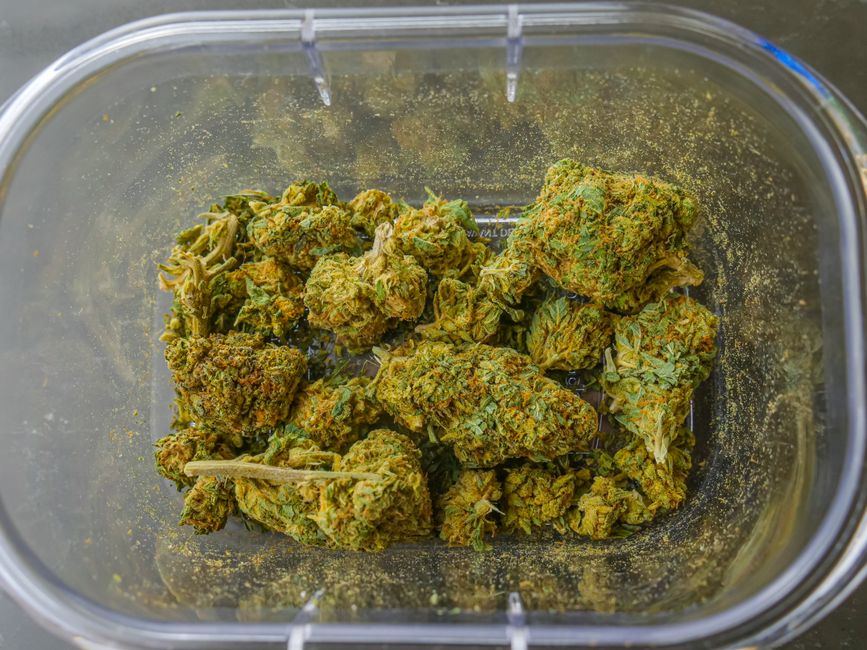
Flower shipments are at the highest risk in the scenario discussed because the product is recognizable, often sold in a form that invites direct scrutiny, and may be evaluated using cannabinoid measurements that include THCA. A shipment can attract questions about its identity, test results, labeling, intended market, and legal status. A seller who can produce only a generic certificate or an old report may have difficulty showing that the tested material corresponds to the shipment being inspected.
Flower also makes batch-level traceability especially useful. A test report for one harvest or lot does not establish the results for another. If bags from different lots are combined, relabeled, or shipped under a single product name, the business needs records that explain that chain of custody. Otherwise, even a genuine report may not be persuasive evidence for the material in the package.
For this reason, companies shipping flower should check the details before dispatch: the lot identifier on the product, the identifier on the lab report, the test date, the reported cannabinoid panel, and the destination market’s requirements. They should also ensure that invoices and shipping documents describe the product consistently. Paperwork cannot guarantee that a shipment will be accepted, but gaps make it harder to explain what it is and why it should be treated as compliant.
Third-party testing is only useful when the records connect
Third-party lab testing can provide independent evidence about a batch, but a lab report is not a universal compliance passport. Its value depends on whether it tests the right material, covers the relevant analytes, identifies the sample clearly, and uses methods and reporting conventions suited to the question at hand.
Businesses should check whether the certificate of analysis identifies the laboratory and sample, states the test date, lists the relevant cannabinoid results, and gives a batch or lot number that matches the product records. They should also understand whether the sample was supplied by the company, collected independently, or otherwise handled in a way that affects how representative it is of the product sold.
Posting batch lab results online can make information easier for buyers to find and compare. But an online result is only helpful if it is current, legible, tied to the product’s lot, and accompanied by enough context to interpret it. A QR code that leads to a report for a different batch—or to a result that omits the measure the buyer needs—can create more confusion than confidence.
A practical document check before shipment
-
Match the identities. Confirm that product, package, invoice, and lab report use consistent names and batch or lot numbers.
-
Check the measurement. Verify that the report addresses the applicable THC measure, including THCA where the relevant standard requires total THC.
-
Ever notice how review the package facts. Where a per-container limit applies, confirm the package size and the calculation used to assess total milligrams per container.
-
Keep supplier records. Retain purchase, ingredient, and handling records sufficient to trace the product through the documentation supply chain.
-
Substantiate claims. Keep records that support statements about testing, sourcing, or organic status. Do not imply that a product or business is certified unless the certification actually applies.
-
Check the destination. Confirm the buyer’s specifications and applicable state, federal, and market requirements before dispatch.
Buyer compliance demands are shaping the market
Documentation is not only about a regulator asking questions. Buyers have their own compliance processes. Retailers, distributors, manufacturers, and institutional purchasers may request specifications, test reports, traceability records, or proof supporting particular claims before they approve a supplier. These buyer compliance demands can be stricter or more detailed than a seller expects.
A buyer may ask for a current certificate of analysis, a defined testing panel, a supplier questionnaire, or a clear explanation of how batches are separated. Another may need records to support its own labeling review or customer-facing disclosures. If the seller cannot respond promptly, the buyer may choose a supplier that can—even if the product quality appears comparable.
That is why it helps to treat compliance documents as part of the product’s commercial readiness. A well-organized file reduces avoidable back-and-forth, helps buyers assess risk, and makes it easier to address a discrepancy. It does not eliminate the possibility of a failed test or a regulatory change, but it gives the parties a shared factual starting point.
Certifications and brand claims need precise support
Claims about sourcing and production can also create documentation obligations. For example, a company making an organic claim should understand which product, ingredient, facility, or operation is covered by its certification and what supporting records it must retain. Organic certification proof should correspond to the claim being made; it should not be used to imply that every product in a brand’s catalog is certified when that is not the case.
Brands such as Joy Organics operate in a consumer environment where clear product information and trust matter. For any brand, the broader lesson is that a claim should be precise enough to verify. “Lab tested” should link to meaningful testing information. “Organic” should be supported by applicable certification. A claim about THC should state the basis for the measurement, and should never be stretched beyond what the batch results establish.
Organizations such as the US Hemp Roundtable can be part of industry conversations about policy and compliance. Still, trade-group resources are not a replacement for checking the controlling rule, the relevant agency’s guidance, and the requirements of a particular buyer or destination market. Businesses should distinguish advocacy information and general education from binding legal requirements.
Preparing for the December 11 deadline without guessing
The December 11 US hemp rule deadline is a useful prompt to review operations, but businesses should confirm exactly what the date refers to and which provisions apply to them. A deadline may concern an effective https://en.mercopress.com/2026/10/14/new-us-hemp-rules-take-effect-december-11-shifting-demand-for-south-american-exporters date, a transition period, a filing requirement, or a specific product category. Those are not interchangeable. Check the underlying legal text and current agency materials, and document the basis for the company’s interpretation.
Before the deadline, companies can inventory affected products, identify which batches may be subject to new measurements or package limits, and ask suppliers for updated specifications. They can review labels and online product pages, test whether existing reports provide the necessary total-THC information, and establish a process for holding or reviewing batches with incomplete records. They can also ask buyers what records they will require at or after the relevant date.
The following table summarizes the connection between the product question and the paperwork that helps answer it:
Question Useful evidence Common gap to avoid What is in this batch? Batch-specific third-party lab testing and a matching certificate of analysis Using a report that cannot be tied to the shipped lot Does the result address total THC? Results and method information that account for THCA where required Assuming a delta-9 result alone answers a total-THC question Does the product meet a per-container cap? Package information and a documented calculation against the applicable limit Confusing a concentration percentage with milligrams per container Can the product be traced? Supplier, batch, inventory, and shipping records Mixing lots without a documented chain of custody Are marketing claims supported? Current testing records, applicable certification, and approved claim language Making broad claims that exceed what the evidence provesThe takeaway: evidence travels with the product
Paperwork matters as much as the product because hemp compliance depends not only on what a product is, but on whether a business can show what it is. The move from delta-9 THC alone toward total THC, including THCA, makes the choice of test and the interpretation of results more consequential. A 0.4 mg total THC per-container cap makes package-level facts important. Flower shipments face heightened scrutiny, so batch identification and consistent records deserve particular attention.
One-sentence legal takeaway: Treat the December 11 deadline, total-THC measurement, and any per-container cap as requirements to verify against the controlling rule and guidance, then keep batch-specific records showing how each product meets them.
Good documentation will not rescue a product that fails an applicable standard. But without it, a business may struggle to prove that a compliant product is, in fact, the one it tested and shipped. In a market shaped by buyer compliance demands, traceability and clear evidence are not extras—they are part of delivering a product buyers can responsibly evaluate.